
Lake County Criminal Court Cases
Lake County criminal court cases can occupy two related files. The 79th District Court hears misdemeanors within its jurisdiction and conducts the complaint, arraignment, probable-cause conference, and preliminary examination or waiver in a felony matter. If the court finds probable cause or the examination is waived, the felony is bound over. The 51st Circuit Court then handles arraignment on the information, motions, a plea or trial, sentencing, and later proceedings. Looking at just one level can leave the story unfinished.
The Lake County Trial Court clerk keeps the judicial record. That file differs from an arrest report or jail booking record. It shows what prosecutors filed and what the court did. A police narrative, body-camera recording, or 911 record remains with the agency that created it. When a court file refers to an incident number but does not contain the report, use the county FOIA route or the arresting agency rather than asking the clerk for an investigative file.
Two Lake County Criminal Courts
The same public counter serves both Lake County criminal courts, but their roles remain distinct. Ask which court number belongs to the requested matter before ordering a copy. A district case that ends with a bindover points to a second circuit file. The final plea, verdict, sentence, or dismissal may appear there under a different case number.
Family Division also uses the courthouse, but juvenile records have restricted public access. The ordinary public criminal search should not be expected to expose those files.
| Court | Criminal role | Public contact |
|---|---|---|
| 79th District Court | Misdemeanors and early felony stages | Suite 300, 231-745-4614 |
| 51st Circuit Court | Felonies after bindover, disposition, and sentence | Shared Suite 300 counter |
| Family Division | Juvenile matters with restricted public access | Trial Court clerk |
Searching Lake County Case Records
Begin with the official MiCOURT Case Search. Coverage depends on participating courts, and the online result is informational rather than the certified court record. Search both Lake County court levels when tracing a felony. A name is useful for discovery, while a known case number is the most direct key. Open the register of actions and read the disposition for every count.
- Select the relevant Lake County court in MiCOURT when it is offered.
- Search by legal name, or use the local case number when known.
- Check both district and circuit results for a felony that may have been bound over.
- Read the filing date, statute, hearings, count disposition, and sentencing entry.
- Call the Trial Court clerk for an official, archived, plain, or certified copy.
The available fields depend on the court and entry route. Date of birth may help distinguish a common name where the interface exposes it.
| Field label | Type | When used | Notes |
|---|---|---|---|
| Court | Dropdown | At entry | Select the participating Lake County court. |
| Search Type | Options | Required | Choose party name or case number. |
| Last Name/Business Name | Text | Party search | Exact and partial behavior may vary. |
| First Name | Text | Optional | Narrows party results. |
| Case Number | Text | Case search | Use the local court number. |
| Date of Birth | Date | If available | Helps separate common names. |
Missing Lake County Court Cases
A missing MiCOURT result does not establish that no Lake County criminal court case exists. The court may not be available in the current selector, an older file may not be indexed online, or a public document may not be downloadable. Some participating courts limit the criminal convictions shown by sentencing date, as marked in the selector. Call the clerk at 231-745-4614 when the online path stops.
Give the legal name, approximate filing year, and case number if known. Ask whether the matter was in district court, moved to circuit court, is archived, or is restricted. The clerk can explain how to request a plain or certified copy and provide a current fee estimate. No official Lake County criminal copy fee was located in the source material, so obtain the amount before ordering.
Inside a Lake County Case File
A Lake County court file is organized around one case rather than every event tied to one person. Its header identifies the court, case number, case type, filing date, status, and parties. Charge entries should be read count by count because the prosecutor may amend a complaint, dismiss one count, or resolve another through a plea. “Closed” describes docket status, not the legal outcome.
The public index can list documents without offering each document online. The register of actions is the timeline. It may show arraignment, examination, bindover, motions, hearings, plea, trial, sentence, warrant, payment, and closure events. Financial details such as fines, costs, restitution, and payment status vary by case and by what the court publishes.
| Case Number & Court | Identifies the district or circuit file and its local number. |
|---|---|
| Charging Document | The district complaint or circuit information states the filed accusations. |
| Counts | Shows offense text, statute, level, status, and disposition by charge. |
| Register of Actions | Lists filings, hearings, orders, and other docket events in date order. |
| Hearings | May provide the date, time, type, judicial officer, and location. |
| Disposition & Sentence | Records dismissal, acquittal, plea or verdict, judgment, and sentence. |
Reading Lake County Case Dockets
The register of actions solves many common reading errors. “Bound over” means a felony moved from district court to circuit court after probable cause or waiver. It is not a conviction. An arraignment states the charge and addresses plea or case status. A disposition gives the outcome of a charge, while sentencing follows a conviction. Each word answers a different question.
Compare the filed offense with the final count. MiCOURT has warned that an attempt charge under MCL 750.92 may display “FELONY” in a way that requires closer legal review. Do not rely on one level label. Check the statute, the count disposition, and the judgment, then ask the Lake County clerk about an unclear entry.
- Complaint
- The initial written accusation that starts the district court case.
- Information
- The prosecutor-filed charging document used in circuit court after bindover or waiver.
- Bindover
- The transfer of a felony from district court to circuit court.
- Disposition
- The final outcome assigned to a charge or case.
How a Criminal Case Moves
A Michigan felony moves through both Lake County trial court levels. The district judge handles the first appearance, bond, probable-cause conference, and preliminary examination unless that hearing is waived. Once bound over, the circuit file records the information, further arraignment, motions, and the route to a plea or trial. Misdemeanors within district jurisdiction generally remain at the first level.
Case flow: Charges Filed › Arraignment › Pretrial › Plea or Trial › Disposition › Sentencing
A dismissal can occur before the end of that line. An acquittal follows a not-guilty verdict. A guilty plea or verdict must be followed through judgment and sentence. For the prior arrest and booking trail, the separate Lake County arrest lookup explains agency and jail records that do not become the court file.
Federal Cases Beyond Lake County
Lake County’s state trial courts do not hold federal criminal dockets. Federal matters for the county fall within the U.S. District Court for the Western District of Michigan, Southern Division. The court’s official Western District site identifies the federal forum and its public services.
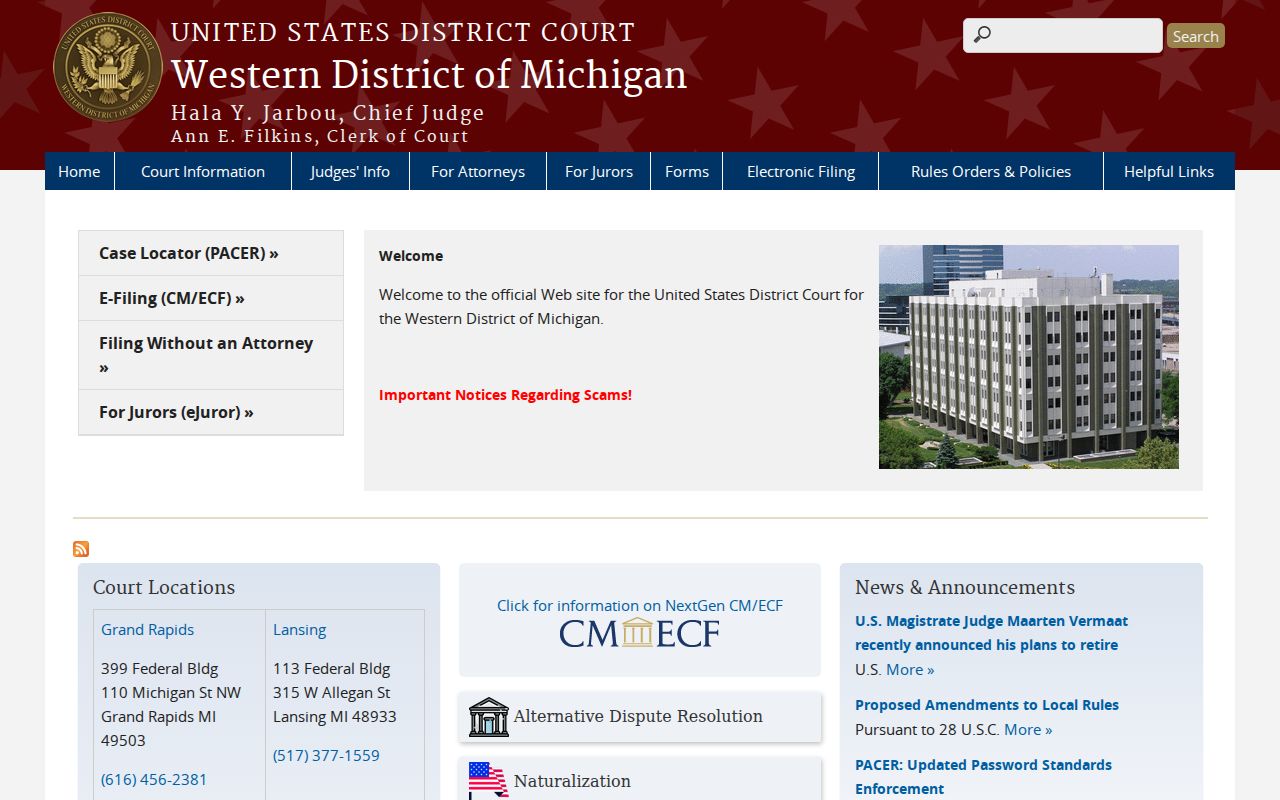
This separate forum explains why a Lake County name search in MiCOURT cannot serve as a complete federal case check.
Docket sheets and filed federal documents are searched through PACER, which requires an account and uses its current federal fee schedule.
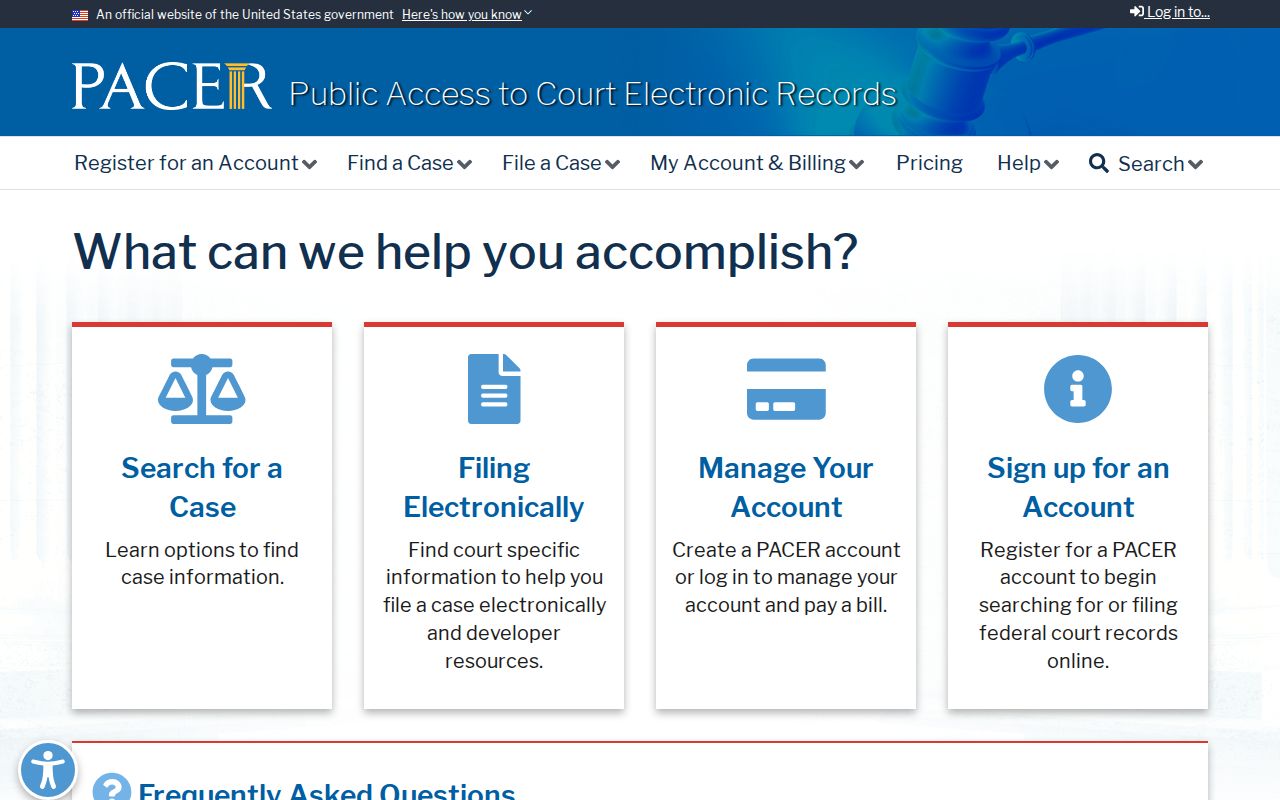
PACER supplements the county court search; it does not contain the 79th District or 51st Circuit files.
No Village Criminal Court Dockets
Neither Baldwin nor Luther operates a municipal court. Village ordinance and misdemeanor matters route to the 79th District Court instead. A search for a Baldwin Municipal Court or Luther Municipal Court points to an office that does not exist. Begin with the Lake County Trial Court counter or select the county district court in MiCOURT.
This local structure also affects records requests. Village clerks hold their own administrative and ordinance materials, but the county Trial Court holds filed criminal cases. Sheriff reports stay with the sheriff or county FOIA custodian. Choosing the record holder first avoids sending the same request among offices that keep different parts of the event.
Case Record Access & Restrictions
Michigan Court Rule 8.119(H) generally permits inspection and copies of case records unless a statute, court rule, or order restricts access. That judicial route differs from the Michigan Freedom of Information Act used for executive and local agency records. Juvenile matters, protected personal identifiers, victim information, and other nonpublic case classes may be hidden or redacted. Adoption, child-protective, mental-health, and certain protective-order material is not exposed through the ordinary MiCOURT search.
A set-aside can change public access to a qualifying conviction. The Michigan State Police set-aside instructions explain the state record-processing side of that relief.
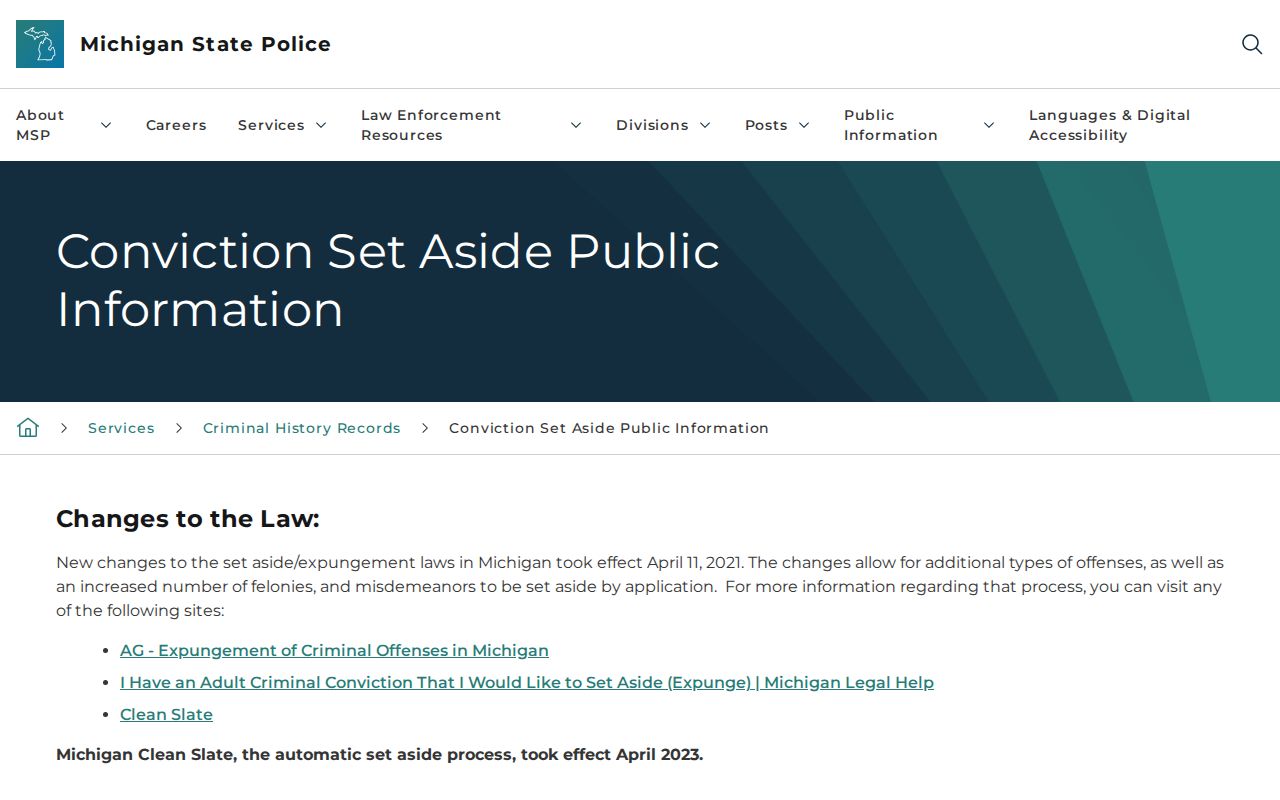
The court of conviction still controls its judicial file, so confirm any order with the Lake County clerk and compare it with the state record.
Online access is not the official record. Ask for a certified copy when formal proof of the judgment is needed. Bulk downloading from MiCOURT is prohibited, and a search result should never be used to infer facts that the disposition does not state.